I'm not sure what triggers it (interest rates? the weather? disruptions to the earth's magnetic field?)but every three years or so a section of metropolitan types discover the joys of smallholding and wax lyrical about the joys of growing your own vegetables and waking up to find deer grazing outside one's window. Obviously I could rant for some considerable time about deer and their base, evil natures but instead here's a chance to wax lyrical about the joys of metropolitan areas.
I was invited to a birthday party down on the South Downs which are blessed with easy walking, great views and a lovely youth hostel. The complexities of rail tickets meant that I had a day of wandering in Brighton before heading north. There had been another series of storms battering the south coast a couple of days previously which provided perfect conditions for beachcombing. Brighton is a great city with food joints such as Bill's that are so hip it hurts but there's an edge of menace that it'll never quite shake with a forceful sea on its doorstep. It's hard to maintain a sense of elegance when everything on the seafront rusts as you look at it. The sea had thrown up contrasting white chalk and black wood (remnants from the last burning of the west pier) pebbles, both honeycombed by sea creatures. There was also a tangle of mermaid's purses and starfish limbs and then a random stack of goose barnacles who'd been uprooted alongside their wooden home.
Last summer we had great volunteer from Asturia staying at Drumbuidhe. His English wasn't great but, with the aid of Alan Davidson's North Atlantic Seafood, we established that goose barnacles fetch 100 euros a kilo in midwinter when it becomes worthwhile harvesting the difficult wee sods. I'm afraid I had a 3 day journey north ahead of me so I had to resist the temptation to see what all the fuss is about them.
The journey north took in such wonders as steak and chips at Relais de Venise and Kate Tempest at West Yorkshire Playhouse ending up finally in Glasgow where I had a last burst of sophistication cooking polenta before heading north. The reasoning behind polenta instead of potato is that I'm still eating my way through last year's anya potatoes and can't bring myself to pay for potatoes in the shops.
Grilled Polenta
1 cup cornmeal (significantly cheaper than stuff labelled 'polenta')
3 cups water
very large knob butter
2 tsp vegetable stock powder
very large knob cheese (chopped)
handful of parsley chopped
mix one cup of cornmeal and one cup water
bring the remaining two cups water, butter and veg powder to boil
tip in the damp polenta and simmer for about 15 minutes 'til very thick
remove from the heat and stir in the cheese and parsley
pour into a small tray and leave 'til cool
cup into chunky chip pieces and grill on two sides 'til browned
serve with garlic mayonnaise or ragu sauce
Tuesday, 4 March 2014
Friday, 21 February 2014
best laid plans
As the rain rains incessantly, with only a bit of blustering for light relief, there's very little to do in these dog days of the year. My mother, hardened by many years of Scottish winters, took up tapestry and it was only her untimely death that saved us all from slow suffocation by cushions. I've experimented with knitting but there's a (very low) limit to the number of dropped stitches I can accommodate before my frustration at my lack of basic womanly skills becomes too much. So, once the final episode of 'The Bridge' has finished I'm stuck with reading, plotting and eating.
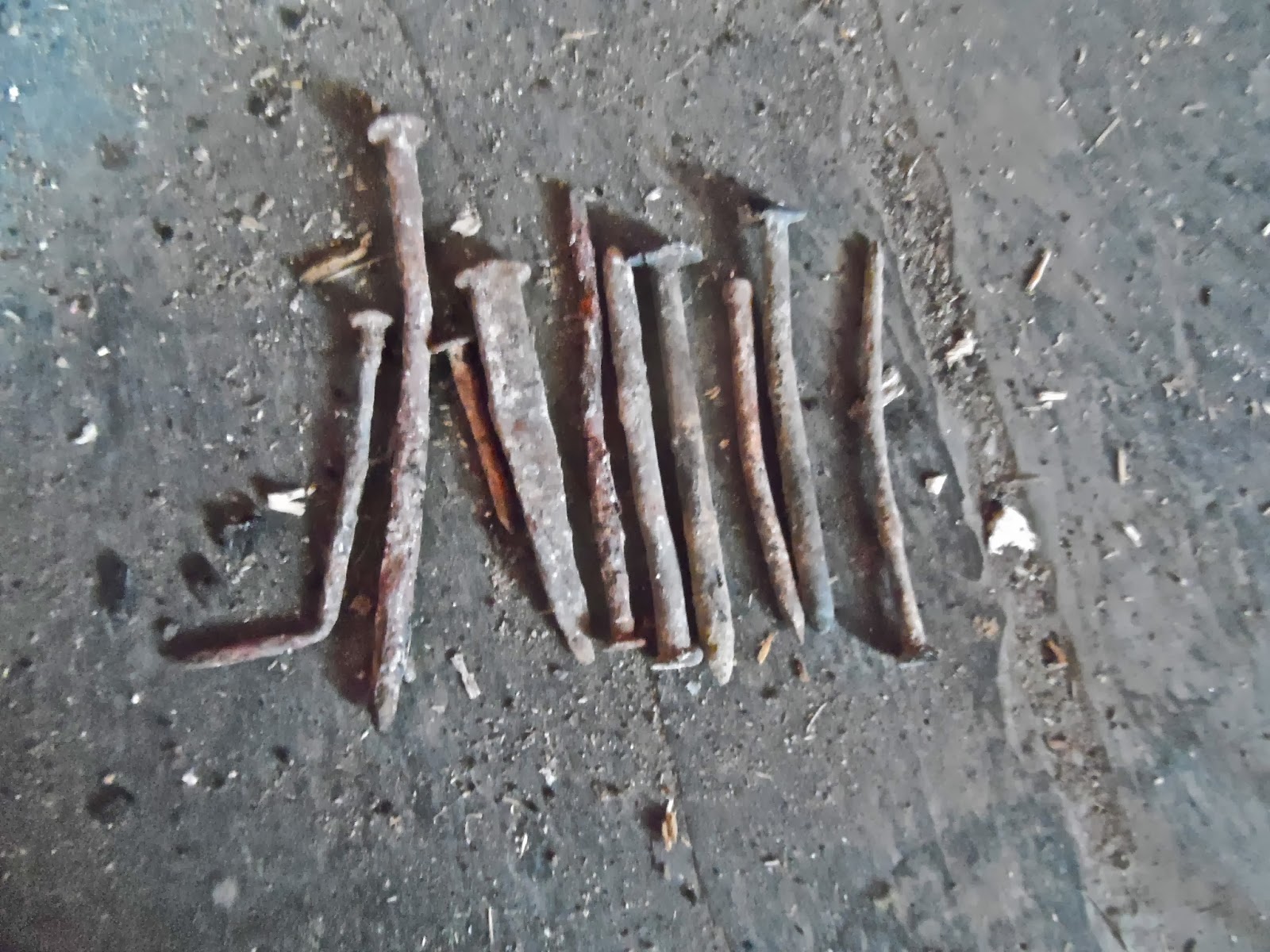
The reading has been dealt with by Neal Ascherson's Stone Voices from the London Library which starts off with lyrical descriptions of Dalriada sparked by Kilmartin Glen. I too placed my foot in the carving on Dunadd hill when I visited just, you know, in case. When the sun hangs low you can see the marks that those before us have made in the shadows. Just a week of winter burning threw up this collection of ironmongery.
The book does get rather bogged down in its central portion where Neal Ascherson personally saves civilisation but these are interesting times and he's seen a fair bit of them. I've got heavier reading to come when the quasi white paper of Independence arrives next week. I was down in Plymouth (but still registered to vote in Edinburgh) during the devolution referendum. I was proud to be the only person who ordered the white paper from Plymouth's Waterstones and I felt the weight of history as I sat down to my postal vote. This time I feel obligation rather than excitement but at least Mr Ascherson's warmed me up.
The plotting is confined to heady plans for the coming year: gabion reinforcements on the track! six varieties of potatoes! rearranging the fank kitchen! death to all deer! but hasn't got as practical as a funding application for Drimnin cinema. I'm hoping the shame of taking over a year to out public licensing costs will spur me to finish it. We now have Sam Firth in residence with her fab film Stay The Same and if I don't get on with it sharpish we'll end up with a film festival and no damn cinema.
The eating is going well despite the fact that 'turnip' is cited as one of the highlights of February in my seasonal vegetable guide. Although the damn deer have eaten all the cavolo nero planted last summer there's plenty of kale around and I'm not too proud to buy it. My life has been improved enormously by the discovery that kale chips are not as worthy as they sound although this may have a bit to do with the amount of salt I use.
Kale Chips
kale leaves, chopped into bite size pieces and with ribs removed
olive oil
salt
* preheat the oven to 300F, 150C, gas mark 3 (it's more of a drying than a roasting thing)
* coat the kale with the oil (I end up having to use my hands for curly kale) using as little as possible
* lay the pieces on a baking sheet in one layer not touching each other - I have to do them in several batches and this is the only bit of hassle
* sprinkle generously with salt
* bake 'til they just start browning, about 10 minutes
Cold beer, kale chips and a decent fire makes even the dampest February tolerable.
The reading has been dealt with by Neal Ascherson's Stone Voices from the London Library which starts off with lyrical descriptions of Dalriada sparked by Kilmartin Glen. I too placed my foot in the carving on Dunadd hill when I visited just, you know, in case. When the sun hangs low you can see the marks that those before us have made in the shadows. Just a week of winter burning threw up this collection of ironmongery.
The plotting is confined to heady plans for the coming year: gabion reinforcements on the track! six varieties of potatoes! rearranging the fank kitchen! death to all deer! but hasn't got as practical as a funding application for Drimnin cinema. I'm hoping the shame of taking over a year to out public licensing costs will spur me to finish it. We now have Sam Firth in residence with her fab film Stay The Same and if I don't get on with it sharpish we'll end up with a film festival and no damn cinema.
The eating is going well despite the fact that 'turnip' is cited as one of the highlights of February in my seasonal vegetable guide. Although the damn deer have eaten all the cavolo nero planted last summer there's plenty of kale around and I'm not too proud to buy it. My life has been improved enormously by the discovery that kale chips are not as worthy as they sound although this may have a bit to do with the amount of salt I use.
Kale Chips
kale leaves, chopped into bite size pieces and with ribs removed
olive oil
salt
* preheat the oven to 300F, 150C, gas mark 3 (it's more of a drying than a roasting thing)
* coat the kale with the oil (I end up having to use my hands for curly kale) using as little as possible
* lay the pieces on a baking sheet in one layer not touching each other - I have to do them in several batches and this is the only bit of hassle
* sprinkle generously with salt
* bake 'til they just start browning, about 10 minutes
Cold beer, kale chips and a decent fire makes even the dampest February tolerable.
Monday, 30 December 2013
wild geese
There are animals all over these hills and don't we know it. Our twenty-year deer fence has finally given up and the garden is now invaded nightly by particularly cunning deer. They're reckoned to have escaped the culls on Rahoy so they've learnt to be nervous of people (especially people in landrovers with lights and guns) which makes them hard to get at but has not blunted their appetite for everything green and pleasant in the garden. Even the artichokes, which are thistles dammit!
Elsewhere on the west coast there are problems with geese which can strip grassland of the crops that both crofters and native birds rely on. Scottish Natural Heritage (SNH) has started culling Greylag geese and checking to see if this controls the population. Since SNH is a quango and not a retailer they've been stuck for what to do with the resulting goose meat. This Christmas some of it ended up on our table where I struggled to find any references to cooking wild as opposed to domestic goose - the birds came jointed with dark red meat, no fat (the biggest difference with the domestic birds) and a distinctly fishy smell.
In the end the breasts were pan-roasted for a fine Christmas dinner and the rest of the meat turned into a fine casserole to keep us well-fed and warm up here n the west coast while I mutter to myself about the evil deeds of deer and dream of the venison to come.
Wild Goose Casserole
* dripping or vegetable oil
* jointed meat (breasts and legs) from a couple of geese
* two chopped onions
* jar of rowan jelly
* glass of red wine
* cup of dried flageolet beans (soaked overnight and then cooked for 1.5 hours)
* 1 pint vegetable stock & salt
Heat the dripping or oil on the stovetop in an ovenproof pan that has a lid, chop the meat into cubes if possible, brown in the dripping and remove. Add the onions and brown gently. Add the red wine to the hot pan and stir to gather the bits and pieces stuck to the bottom, add the rowan jelly, browned goose, beans and vegetable stock. Place the lid on and pop the pan in a medium oven (gas mark 3 / 180C) for an hour or so. Check the seasoning, strip the meat from the legs (if you can be bothered) and you're good to go.
The ingredients for this reflect what was available in our larder - to be honest I'm not even sure if it was rowan jelly (could have been redcurrant, mixed berry or maybe even sloe) since slugs have played havoc with the labels in our pantry. After the deer, the molluscs are next.
Elsewhere on the west coast there are problems with geese which can strip grassland of the crops that both crofters and native birds rely on. Scottish Natural Heritage (SNH) has started culling Greylag geese and checking to see if this controls the population. Since SNH is a quango and not a retailer they've been stuck for what to do with the resulting goose meat. This Christmas some of it ended up on our table where I struggled to find any references to cooking wild as opposed to domestic goose - the birds came jointed with dark red meat, no fat (the biggest difference with the domestic birds) and a distinctly fishy smell.
In the end the breasts were pan-roasted for a fine Christmas dinner and the rest of the meat turned into a fine casserole to keep us well-fed and warm up here n the west coast while I mutter to myself about the evil deeds of deer and dream of the venison to come.
Wild Goose Casserole
* dripping or vegetable oil
* jointed meat (breasts and legs) from a couple of geese
* two chopped onions
* jar of rowan jelly
* glass of red wine
* cup of dried flageolet beans (soaked overnight and then cooked for 1.5 hours)
* 1 pint vegetable stock & salt
Heat the dripping or oil on the stovetop in an ovenproof pan that has a lid, chop the meat into cubes if possible, brown in the dripping and remove. Add the onions and brown gently. Add the red wine to the hot pan and stir to gather the bits and pieces stuck to the bottom, add the rowan jelly, browned goose, beans and vegetable stock. Place the lid on and pop the pan in a medium oven (gas mark 3 / 180C) for an hour or so. Check the seasoning, strip the meat from the legs (if you can be bothered) and you're good to go.
The ingredients for this reflect what was available in our larder - to be honest I'm not even sure if it was rowan jelly (could have been redcurrant, mixed berry or maybe even sloe) since slugs have played havoc with the labels in our pantry. After the deer, the molluscs are next.
Sunday, 8 December 2013
rain, snow and seaweed
So this is winter. There's still a trace of lushness in the land but the beetroot leaves are, alas, just a memory now since deer got into the garden. The fence is now rotten in too many places to patch properly. If the deer sneeze next to the posts they'll fall down. Hopefully we'll get a new fence in the spring and a stack of deer (who aren't supposed to be in this part of the estate anyway) will get culled this coming week. Just to complicate matters there's been a breakout by the estate cattle who're kept up behind the house. I'm not sure where the enclosure is so I'm hoping to walk out and check.
The winter weather of snow and ice hasn't made it to our valley yet although there are traces on the hill sufficient to prevent my lame fiat panda making it over the hill. On the track here there are bits of seaweed from the Thursday storm and the boat has been shifted a metre or so but everything (track, house, boat) seems to be in one piece which is the crucial thing. I'm still feeling a bit overwhelmed by the tidying up involved. I've got a stack of clean laundry to be tidied away which is easy enough but when that's done I've got the hallway to mop then moving onto the really difficult stuff. At some point last month the fank door was left open. It might have been C or it might have been a passing walker (I offered a bed in the fank to a lad who's walking round the British coast, he didn't reply to the offer but he might have stuck his head in to check what was available). The end result is the entry of the pine marten who shat all over the bathroom floor and had great fun with the bags of artisan flour left lying around. All this mess is lying around C's half-installed CCTV system.
This probably explains why I'm sitting in my pyjamas at midday for the second day running, waiting for inspiration or enthusiasm to strike. Fortitude, fine coffee and a decent fire should get me going.
The winter weather of snow and ice hasn't made it to our valley yet although there are traces on the hill sufficient to prevent my lame fiat panda making it over the hill. On the track here there are bits of seaweed from the Thursday storm and the boat has been shifted a metre or so but everything (track, house, boat) seems to be in one piece which is the crucial thing. I'm still feeling a bit overwhelmed by the tidying up involved. I've got a stack of clean laundry to be tidied away which is easy enough but when that's done I've got the hallway to mop then moving onto the really difficult stuff. At some point last month the fank door was left open. It might have been C or it might have been a passing walker (I offered a bed in the fank to a lad who's walking round the British coast, he didn't reply to the offer but he might have stuck his head in to check what was available). The end result is the entry of the pine marten who shat all over the bathroom floor and had great fun with the bags of artisan flour left lying around. All this mess is lying around C's half-installed CCTV system.
This probably explains why I'm sitting in my pyjamas at midday for the second day running, waiting for inspiration or enthusiasm to strike. Fortitude, fine coffee and a decent fire should get me going.
Thursday, 24 October 2013
turned out nice again
Autumn is upon us and all the machines have started breaking down with a vengance. To be fair to the poor hard-pressed engines they have been a bit poorly all year it's just that when the weather turns brisk we realise how essential they are.
October started with a bit of a bang when I got a phone call at work from C to say that my sister was in intensive care with Guillon Barre syndrome. Can't really remember much of that day except that I did some intensive reading of the council's time-off-work policy, frantic wikipedia searches and clearing of schedules. By the next morning I'd worked out that she didn't have GB syndrome she was in hospital for tests to try and uncover a reasn for her tiredness and the dramatic neurological syndrome was a possible rather than actual diagnosis. The confusion arose because C can spook easily and sister's partner laid on the drama a bit thick for an elderly gent.
Once the all-hands-on-deck drama had dissipated we were left with the other looming crisis of a diesel generator that remains a key part of our wee Drumbuidhe-grid and which is losing compression. For those interested in such things, local stand-alone power systems usually have a form of storage so that you can switch the lights on when the sun isn't shining (if you use photovoltaics) or listen to the radio when it's not raining (if you use hydro). Batteries are the standard storage method (yes, yes I know there are lots of better systems like compressed air and pumped water but for those of us rubbish access roads and small pockets, batteries are the default) and they require maintenance. Maintenance means regular, timetabled charging and (since neither sun, wind, nor rain work to timetables) that means a diesel genny.
The saga of the genny will continue at a slightly later date but it was missing a crucial ingredient in that it was played out against the backdrop of weather so strangely perfect that it felt like all of the west coast was on drugs.
October started with a bit of a bang when I got a phone call at work from C to say that my sister was in intensive care with Guillon Barre syndrome. Can't really remember much of that day except that I did some intensive reading of the council's time-off-work policy, frantic wikipedia searches and clearing of schedules. By the next morning I'd worked out that she didn't have GB syndrome she was in hospital for tests to try and uncover a reasn for her tiredness and the dramatic neurological syndrome was a possible rather than actual diagnosis. The confusion arose because C can spook easily and sister's partner laid on the drama a bit thick for an elderly gent.
Once the all-hands-on-deck drama had dissipated we were left with the other looming crisis of a diesel generator that remains a key part of our wee Drumbuidhe-grid and which is losing compression. For those interested in such things, local stand-alone power systems usually have a form of storage so that you can switch the lights on when the sun isn't shining (if you use photovoltaics) or listen to the radio when it's not raining (if you use hydro). Batteries are the standard storage method (yes, yes I know there are lots of better systems like compressed air and pumped water but for those of us rubbish access roads and small pockets, batteries are the default) and they require maintenance. Maintenance means regular, timetabled charging and (since neither sun, wind, nor rain work to timetables) that means a diesel genny.
The saga of the genny will continue at a slightly later date but it was missing a crucial ingredient in that it was played out against the backdrop of weather so strangely perfect that it felt like all of the west coast was on drugs.
Monday, 29 July 2013
Signs & Symbols
Even with a lack of water the countryside and the garden are blooming away. This fecundity brings with it a host of garden pests, all with their own telltale signs: sawfly larvae can strip the gooseberry bushes of leaves in a week and the first sign is two rows of neat, perfectly spaced holes on a couple of leaves as the eggs hatch from the underside; goldfinches pick away at the buds on the fruit trees leaving them brown, damaged and useless; wireworm burrow into the potatoes leaving a neat hole but a rotten interior; the pine marten gorges on our cherries (attracted by the bright red colour) leaving piles of poo filled with cherry stones.
The most destructive pest however is the EIV, the eager, ignorant visitor. I left the cottage on Sunday to go to work in Glasgow and returned on Friday to the ominous words from C "The garden's looking great! the volunteers have done some fabulous work!" The garden is indeed looking great but mainly thanks to fruit trees planted 20 years ago and years of wild flower planting by my mother (slightly slowed down by last year's EIV who sprayed the wild flowers with glyphosate to 'neaten' the garden). Alas the EIV's had been at the vegetable plot so that my dill, rhubarb and onions had all been dug up and there were a couple of suspicious footprints in the salad bed.
We do love visitors and C is especially fond of them. The volunteers from workaway have been excellent: the admin is pretty arduous but C has really enjoyed the company and the help. We love eager visitors - over the years they've built, fixed and decorated many bits of Drumbuidhe. We love ignorant visitors - this is our home and we're delighted to explain its details and delights to all who visit. However the combination of vague instructions from a demented elderly gentleman; a complete lack of knowledge about my garden and a willingness to 'have a go' produce disasterous results. I do get mightly hacked off sorting out EIV's efforts and I'm at a bit of a loss as to how to prevent them. I've had numerous talks with C about what needs to be done in the garden ranging from 'absolutely nothing' to 'weeding the raspberry beds - nothing else' but still my herbs get removed, my stored seaweed gets used to kill my salad and potatoes planted so we can enjoy them freshly dug are removed early for storage. I'm mystified by people who think they understand someone else's garden and whilst I've considered putting signs up "Do not do anything!" I suspect that EIVs would ignore these, confident that their good intentions mean the signs did not apply to them.
So this is a general plea to helpful visitors everywhere: check with the person who planted the garden before you touch the plants.
Fabulous though the garden is, the location means there are some things we just can't grow but the market in Partick provided a stack of cheap tomatoes for the classic summer soup. I studied architecture for six months in Seville and found the heat in mid-summer destroyed any appetite and energy I had. I lived on a combination of gazpacho served with my landlady's unlimited olive oil and black coffee served by the air-conditioned cafe across the road. This recipe is taken from Lindsey Bareham's Good Soup Book
Gazpacho
1kg ripe tomatoes, skinned and roughly chopped
250g stale white bread
1 cucumber, peeled and chopped
8 spring onions chopped
2 garlic cloves chopped
2 red peppers, skinned, de-seeded and chopped
3 tablespoons sherry vinegar
5 tablespoons olive oil
2 teaspoons vegetable stock
900ml water
blend the ingredients together and chill for at least 4 hours but longer is better
serve with whatever you fancy from bread, olive oil, croutons, diced ham, hard-boiled eggs, chopped peppers, cucumbers, tomatoes, onions.....
Tuesday, 4 June 2013
falling through the floor
The hallway has always been a bit bouncy but recently it was getting very bouncy, verging on soft with the distinct feeling that it was just the cheap vinyl that was holding it together. On Saturday an urge for action overtook me (along with the idea that this was a task C might be able to get involved in) and we started ripping the whole thing apart. This sounds quite vigorous but, in reality, most of the floorboards (and joists) crumbled in our hands through a combination of woodworm (where it was dry) and rot (where it was wet). The original joists (and their 1970s replacements) had been laid directly on the earth and, this being the west coast of Scotland with the highest incidence of horizontal rain known to man, the earth was always going to be damp.
Half the floor has been removed (along with the pervasive smell of damp) and we're now starting to think about sourcing timber replacements (the ideal of a concrete floor will have to wait awhile), laying them in place and patching up the internal t&g lining. At least we have plenty of material for edging the vegetable beds.
Alas (or possibly Hurrah) this was the task that forced C to face the fact that he's getting on a bit and if specifying timber joists is beyond him then he shouldn't really be building an expensive prototype wind turbine that he doesn't understand (even if it does give him the opportunity to buy lots of shiny things). He's sent out an announcement that he's stopping work on it and, although he's sent these out before, I think he might mean it. He's very subdued at the minute but, with a luxury break planned for this weekend, he'll get a fillip of fine food and good company.
The garden is still struggling with the cold spring and subsequent dry spell (as ever the opium poppies are doing marvellously) as well as vigorous attacks on the fruit trees by attractive yet evil gold finches. I gave the salad crops a good talking to whilst I watered them and hope that this will do the trick. The seedlings have started coming away so we'll have cauliflower (posh violet!) and broccoli to go in when the potatoes come out and parsley, dill and chervil to bulk out the herb bed. In a rush of blood to the head I bought some exotic herbs from seeds of Italy in the hope of adding architectural splendour to the herb bed but the angelica is proving rather reticent.
The stalwarts of potatoes (Anya and Charlotte) are doing great (as they should after all that double-digging care and seaweed was lavished on them) and my thoughts have turned to Calmac's summer recipe challenge for their on-board cafeteria. Potatoes are an obvious choice but, as any true islander will tell you, potatoes must be dry. We betray our effete metropolitan nature by only planting waxy potatoes but these do allow us to make some quite superb rosti. So here's a quick potatoe cake to use the last of the stored potatoes and the first of the wild garlic.
ramson rosti
for two people
3 medium sized potatoes, peeled and grated
good handful of wild garlic (ramson) finely shredded
salt and pepper
heat a tablespoonful of oil in a heavy frying pan; mix the ingredients together (with your hands is easiest); form it into a rough ball and press down into the pan when the oil is hot, turn down the heat immediately and place a lid over the pan; cook for ten minutes then (carefully) turn the cake out onto a plate or board and slide it, uncooked side down, back into the pan; cover and cook for a further ten minutes.
Serve with poached egg, ham, sausage, cheese or whatever takes your fancy
Half the floor has been removed (along with the pervasive smell of damp) and we're now starting to think about sourcing timber replacements (the ideal of a concrete floor will have to wait awhile), laying them in place and patching up the internal t&g lining. At least we have plenty of material for edging the vegetable beds.
Alas (or possibly Hurrah) this was the task that forced C to face the fact that he's getting on a bit and if specifying timber joists is beyond him then he shouldn't really be building an expensive prototype wind turbine that he doesn't understand (even if it does give him the opportunity to buy lots of shiny things). He's sent out an announcement that he's stopping work on it and, although he's sent these out before, I think he might mean it. He's very subdued at the minute but, with a luxury break planned for this weekend, he'll get a fillip of fine food and good company.
The garden is still struggling with the cold spring and subsequent dry spell (as ever the opium poppies are doing marvellously) as well as vigorous attacks on the fruit trees by attractive yet evil gold finches. I gave the salad crops a good talking to whilst I watered them and hope that this will do the trick. The seedlings have started coming away so we'll have cauliflower (posh violet!) and broccoli to go in when the potatoes come out and parsley, dill and chervil to bulk out the herb bed. In a rush of blood to the head I bought some exotic herbs from seeds of Italy in the hope of adding architectural splendour to the herb bed but the angelica is proving rather reticent.
The stalwarts of potatoes (Anya and Charlotte) are doing great (as they should after all that double-digging care and seaweed was lavished on them) and my thoughts have turned to Calmac's summer recipe challenge for their on-board cafeteria. Potatoes are an obvious choice but, as any true islander will tell you, potatoes must be dry. We betray our effete metropolitan nature by only planting waxy potatoes but these do allow us to make some quite superb rosti. So here's a quick potatoe cake to use the last of the stored potatoes and the first of the wild garlic.
ramson rosti
for two people
3 medium sized potatoes, peeled and grated
good handful of wild garlic (ramson) finely shredded
salt and pepper
heat a tablespoonful of oil in a heavy frying pan; mix the ingredients together (with your hands is easiest); form it into a rough ball and press down into the pan when the oil is hot, turn down the heat immediately and place a lid over the pan; cook for ten minutes then (carefully) turn the cake out onto a plate or board and slide it, uncooked side down, back into the pan; cover and cook for a further ten minutes.
Serve with poached egg, ham, sausage, cheese or whatever takes your fancy
Subscribe to:
Posts (Atom)