Sunday, 29 June 2014

bother with buoys

Summer is upon us and everything is looking lush.  I had a long rant planned about difficulties with C as he gets grumpier and more perverse by the minute but physical drama took over as I attempted to install the first part of our old/new mooring.

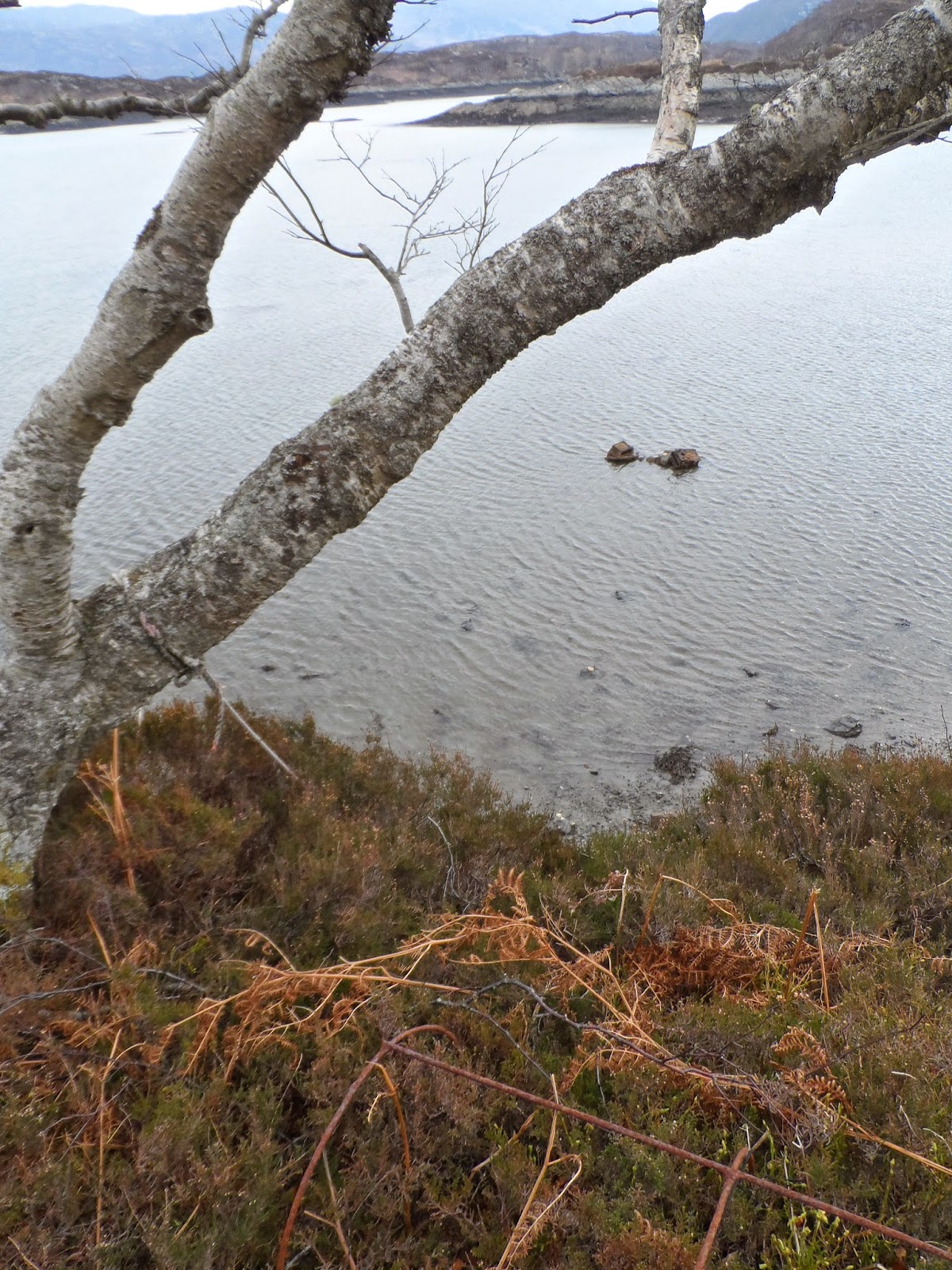
 Many years ago we had a mooring out at the end of the point which was a circle of rope (known as a running trot) attached to a tree on the shore and to an anchor about 15 metres out.  This meant you could get out of the boat, attach it to the rope circle then pull it out to the anchor.  The end of the point only ever dries out at very low tides and the mooring was next to a rock shelf which you could clamber out onto.  The boats were kept safe from bashing against pontoons or rocks and could be used almost all the time.

The downside was that accessing the mooring involved walking to the end of the point and a bit of a scramble up and down the rocky ledge.  We stopped using the mooring about 15 years ago when my mother decided that a pontoon should be set-up on the other side of the bay which she could more easily walk to.  In practice she never did walk out to the new pontoon (it still involved a bit of scrambling over rocks) and the new pontoon dried out at every low tide so we were limited when we could use the boats.  We now have two pontoons: one at road side which only floats at high tide and the metal one on the far side of the bay.  These pontoons are badly secured, falling to bits and covered in projections which have fatally holed one of our boats.  I now spend more of my time patching up the pontoons than I ever spend in an actual boat.


I proposed to C that we kept our boat out of the water this year and spend the time sorting out the pontoons (demolishing the roadside one, creating proper anchors and then moving the metal ones next to the road) and reinstating the old mooring.  The fact that C responded to this suggestion by buying another boat is part of his general confusion.


Two weeks ago at a low, spring tide I traipsed out to the end of the point with chains, shackles and buoy to secure to the old but existing anchor in the fetid mud that makes up the bay.  As I was lowering myself down onto the rocky ledge (about a 3 metre drop) the ancient rope that I was holding onto broke and I fell onto the rock (taking most of the impact on my left arm and leg and avoiding the further 4m drop onto the mud).  I hit my head on the rock and although there wasn't any concussion there was an awful lot of blood.  I limped back to the house along the shore feeling very pathetic and was cleaned and patched haphazardly by a shaken C (in 1999 C befriended a Yorkshireman who was travelling the coast by boat and who slipped, hit his head, and died on the shore as he was returning from the pub on Christmas Eve).  I spent the rest of the day in bed (wanly greeting two bemused Czech volunteers who arrived for a week's working holiday that evening) and drove back to Glasgow the next day.  I went along to A&E on the Sunday for a tetanus shot and reassurance that no great damage had been done.

Two weeks later and I've still got a slight limp (I tore a fair chunk out of my left heel and knee) and a dramatic scar on my forehead.  I'm still a bit shaken but life goes on and C's increasingly manic ebullience still has to be controlled.  I was back up at the cottage this week to transport the next volunteer (a Spanish water engineer who coped admirably with C's shouting) and to provide an impromptu dinner party for a Norwegian sailor and his crew of two.  I'm back in Glasgow now, still recuperating and providing myself with comfort food in the form of a fresh summer pasta.  C has taken to criticising, well, everything and he objected to me calling a dish 'risotto primavera' - he "hates" the name because 'primavera' just means 'Spring'.  I pointed out that risotto is an Italian dish so giving it an Italian name* made sense but having his grumpiness contradicted, no matter how gently, just leads to sulks.  Hey ho.  By myself I'm free to call stuff whatever I like:

Pasta Primavera
(serves one)

5cm chopped chorizo
2 handfuls of skinned broad beans
2 cloves chooped garlic
3 chopped cherry tomatoes
pasta

while the pasta is cooking, saute the chorizo in a dash of oil and skin the broad beans (a bit of a faff but I reckon it's worth it) add the garlic and chopped cherry tomatoes then, just before serving, stir in the broad beans and cooked pasta.  Heat through and serve.

* Pasta Primavera was created in the 1970s in New York but arguing about the relative authenticity of Italian cuisine vs Italian-American cuisine is fraught at the best of times let alone in a small kitchen on the west coast of Scotland with a demented elderly gentleman


Wednesday, 16 April 2014

the naming of things

Finally the west coast is starting to dry out and I've had the chance to try out my, slightly alarming, graphic scheme for the hall flooring.  The hall floorboards were replaced haphazardly with silicon to fill the gaps and they've proved impossible to clean.  The cheapest option to cover them was hardboard so I took the opportunity to try out a comic-book option with the idea that it can always be painted over if it gets too much.  It was already getting a bit much outside.

There was a rush to get this finished before the arrival of my sister, her boyfriend and her two wee boys.  I had intended being in Glasgow whilst they were in residence but the combination of gardening (planting of potatoes and seedlings that were getting too big for the propagators) and the inaugural curry night at the village hall meant that I headed up for what was meant to be the first couple of nights of their stay.  Alas the diesel generator was still recovering from its October reassembling (the guide tube seals had been replaced wrongly so it was leaking oil badly) so gardening was delayed whilst C and I wrestled with mucky manifolds.  This meant I had to stay an extra couple of days finishing up with some frantic weeding and planting: purple-sprouting broccoli and brokali (cross between chinese and european varieties) seedlings planted out; courgette seedlings planted and protected; carrot, beetroot and parsnip sown; rocket, lamb's lettuce and mustard sown; fertiliser applied.

However the extra time gave me the opportunity to discover that my sister's boyfriend is not just incompetent but pretty horrid as well.  This time he wasn't able to dig up my herbs and scatter seaweed in the wrong places and he was limited in what he could do to help C who found boyfriend's attempt to apply PTFE tape excruciating to witness.

Instead he devoted his time to riding roughshod over our culture.  He announced the first night that he and his sons had decided C's new numberplate stood for "Horrible Grumpy Man".  He then repeated this a couple of times daily including using it instead of C's name whilst singing 'Happy Birthday' until I suggested that C was getting depressed (poorly diesel generators and incompetent son-in-laws will do that to a man) and that this repetition wasn't helping.  The boyfriend's use of the passive voice whilst pompously informing his seven-year old son not to use the line didn't fool anybody.  On his second night he insisted on repeating a rubbish joke ("Did you hear the joke about the Haggis? it's offal!") several times despite C and I protesting each time that we found the boyfriend's Scottish accent offensive and distracting and that telling the joke again wasn't helping.  The boyfriend went to Eton.  It shows.  Since he can barely pick up direct requests to stop saying stuff it was hoping too much that he might pick up the following indirect request.

In front of Drumbuidhe there is a small peninsula at the very end of which we used to moor our boat.  This is known to use as 'the point' since it's the only one we can see from the house.  The full name given on the OS map is the gaelic rubha na oitir which refers to the shallow bay (it dries out fully at low tide) it encloses but can also be taken as meaning 'the point'.  Alas the boyfriend has heard this as 'otter point' and despite the fact that none of our family, or previous inhabitants of Drumbuidhe, or maps of this area mention this name, he has decided to use it to demonstrate his familiarity with the area and his bond with nature.  I pointed out that the name of the point was oitir as in 'shallows' in the native language rather than otter as in 'recently-sentimentalised-mammal' in a foreign language but to no avail.  He kept using 'otter point' and I kept feeling a rustle as the people of Morvern shifted in their graves.

Crikey he was relentless:  The fresh wild garlic makes for great fritattas (aka spanish omlette or tortilla).  As I served this the boyfriend gave a wee lecture to his sons about how I could cook this because I'd spent time in Spain.  Needless to say this is rubbish - I didn't have to go to Seville to recognise good food.  It was delicious as I'm sure the many Glaswegians of Italian descent would have agreed.

Wild Garlic Fritatta
(serves four adults and two children)
generous slug of oil
3 leeks - sliced
10 cherry tomatoes cut into quarters
8 medium potatoes cooked, peeled and chopped into chunks
6 eggs
grated cheese
large handful wild garlic, chopped fine
salt and pepper

* heat the oil in the largest all-metal frying pan you have
* fry the leeks over a moderate heat 'til they've just started to brown
* add the tomatoes and potatoes and fry for a couple of minutes
* mix the eggs with the grated cheese, wild garlic, salt and pepper
* pour the egg mixture into the frying pan, moving the vegetables gently aside so the egg mixture is evenly distributed but taking care not to scramble it
* turn the grill up to maximum and put the pan under the grill to cook the top of the mixture (I have to do a bit of twisting and turning to get the top evenly cooked)
* if you're serving to children, check that it's cooked through
* slice and serve

This recipe includes the vegetables I had available and my personal inclinations (I do like the alium and tomato mixture).  I've yet to try the emergency version which uses crisps instead of cooked potatoes.


Tuesday, 4 March 2014

crofting chic

I'm not sure what triggers it (interest rates? the weather? disruptions to the earth's magnetic field?)but every three years or so a section of metropolitan types discover the joys of smallholding and wax lyrical about the joys of growing your own vegetables and waking up to find deer grazing outside one's window.  Obviously I could rant for some considerable time about deer and their base, evil natures but instead here's a chance to wax lyrical about the joys of metropolitan areas.

I was invited to a birthday party down on the South Downs which are blessed with easy walking, great views and a lovely youth hostel.  The complexities of rail tickets meant that I had a day of wandering in Brighton before heading north.  There had been another series of storms battering the south coast a couple of days previously which provided perfect conditions for beachcombing.  Brighton is a great city with food joints such as Bill's that are so hip it hurts but there's an edge of menace that it'll never quite shake with a forceful sea on its doorstep.  It's hard to maintain a sense of elegance when everything on the seafront rusts as you look at it.  The sea had thrown up contrasting white chalk and black wood (remnants from the last burning of the west pier) pebbles, both honeycombed by sea creatures.  There was also a tangle of mermaid's purses and starfish limbs and then a random stack of goose barnacles who'd been uprooted alongside their wooden home.

Last summer we had great volunteer from Asturia staying at Drumbuidhe.  His English wasn't great but, with the aid of Alan Davidson's North Atlantic Seafood, we established that goose barnacles fetch 100 euros a kilo in midwinter when it becomes worthwhile harvesting the difficult wee sods.  I'm afraid I had a 3 day journey north ahead of me so I had to resist the temptation to see what all the fuss is about them.

The journey north took in such wonders as steak and chips at Relais de Venise and Kate Tempest at West Yorkshire Playhouse ending up finally in Glasgow where I had a last burst of sophistication cooking polenta before heading north.  The reasoning behind polenta instead of potato is that I'm still eating my way through last year's anya potatoes and can't bring myself to pay for potatoes in the shops.

Grilled Polenta
1 cup cornmeal (significantly cheaper than stuff labelled 'polenta')
3 cups water
very large knob butter
2 tsp vegetable stock powder
very large knob cheese (chopped)
handful of parsley chopped

mix one cup of cornmeal and one cup water
bring the remaining two cups water, butter and veg powder to boil
tip in the damp polenta and simmer for about 15 minutes 'til very thick
remove from the heat and stir in the cheese and parsley
pour into a small tray and leave 'til cool
cup into chunky chip pieces and grill on two sides 'til browned
serve with garlic mayonnaise or ragu sauce


Friday, 21 February 2014

best laid plans

As the rain rains incessantly, with only a bit of blustering for light relief, there's very little to do in these dog days of the year.  My mother, hardened by many years of Scottish winters, took up tapestry and it was only her untimely death that saved us all from slow suffocation by cushions.  I've experimented with knitting but there's a (very low) limit to the number of dropped stitches I can accommodate before my frustration at my lack of basic womanly skills becomes too much.  So, once the final episode of 'The Bridge' has finished I'm stuck with reading, plotting and eating.

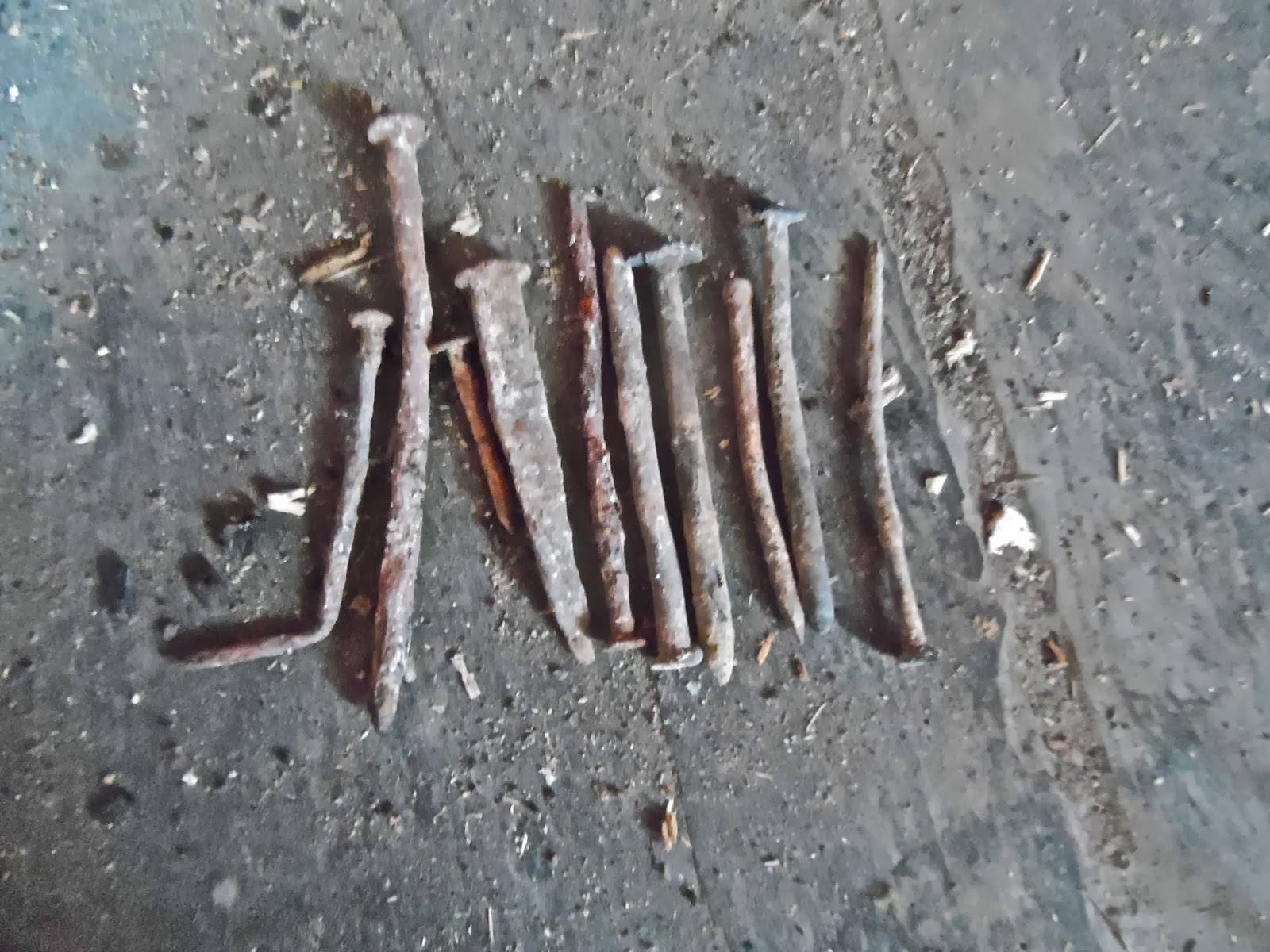
The reading has been dealt with by Neal Ascherson's Stone Voices from the London Library which starts off with lyrical descriptions of Dalriada sparked by Kilmartin Glen.  I too placed my foot in the carving on Dunadd hill when I visited just, you know, in case.  When the sun hangs low you can see the marks that those before us have made in the shadows.  Just a week of winter burning threw up this collection of ironmongery.


The book does get rather bogged down in its central portion where Neal Ascherson personally saves civilisation but these are interesting times and he's seen a fair bit of them.  I've got heavier reading to come when the quasi white paper of Independence arrives next week.  I was down in Plymouth (but still registered to vote in Edinburgh) during the devolution referendum.  I was proud to be the only person who ordered the white paper from Plymouth's Waterstones and I felt the weight of history as I sat down to my postal vote.  This time I feel obligation rather than excitement but at least Mr Ascherson's warmed me up.

The plotting is confined to heady plans for the coming year: gabion reinforcements on the track! six varieties of potatoes! rearranging the fank kitchen! death to all deer! but hasn't got as practical as a funding application for Drimnin cinema.  I'm hoping the shame of taking over a year to out public licensing costs will spur me to finish it.  We now have Sam Firth in residence with her fab film Stay The Same and if I don't get on with it sharpish we'll end up with a film festival and no damn cinema.

 The eating is going well despite the fact that 'turnip' is cited as one of the highlights of February in my seasonal vegetable guide.  Although the damn deer have eaten all the cavolo nero planted last summer there's plenty of kale around and I'm not too proud to buy it.  My life has been improved enormously by the discovery that kale chips are not as worthy as they sound although this may have a bit to do with the amount of salt I use.

Kale Chips

kale leaves, chopped into bite size pieces and with ribs removed
olive oil
salt

* preheat the oven to 300F, 150C, gas mark 3 (it's more of a drying than a roasting thing)
* coat the kale with the oil (I end up having to use my hands for curly kale) using as little as possible
* lay the pieces on a baking sheet in one layer not touching each other - I have to do them in several batches and this is the only bit of hassle
* sprinkle generously with salt
* bake 'til they just start browning, about 10 minutes

Cold beer, kale chips and a decent fire makes even the dampest February tolerable.

Monday, 30 December 2013

wild geese

There are animals all over these hills and don't we know it.  Our twenty-year deer fence has finally given up and the garden is now invaded nightly by particularly cunning deer.  They're reckoned to have escaped the culls on Rahoy so they've learnt to be nervous of people (especially people in landrovers with lights and guns) which makes them hard to get at but has not blunted their appetite for everything green and pleasant in the garden.  Even the artichokes, which are thistles dammit!

 Elsewhere on the west coast there are problems with geese which can strip grassland of the crops that both crofters and native birds rely on.  Scottish Natural Heritage (SNH) has started culling Greylag geese and checking to see if this controls the population.  Since SNH is a quango and not a retailer they've been stuck for what to do with the resulting goose meat.  This Christmas some of it ended up on our table where I struggled to find any references to cooking wild as opposed to domestic goose - the birds came jointed with dark red meat, no fat (the biggest difference with the domestic birds) and a distinctly fishy smell.

In the end the breasts were pan-roasted for a fine Christmas dinner and the rest of the meat turned into a fine casserole to keep us well-fed and warm up here n the west coast while I mutter to myself about the evil deeds of deer and dream of the venison to come.

Wild Goose Casserole

* dripping or vegetable oil
* jointed meat (breasts and legs) from a couple of geese
* two chopped onions
* jar of rowan jelly
* glass of red wine
* cup of dried flageolet beans (soaked overnight and then cooked for 1.5 hours)
* 1 pint vegetable stock & salt

Heat the dripping or oil on the stovetop in an ovenproof pan that has a lid, chop the meat into cubes if possible, brown in the dripping and remove.  Add the onions and brown gently.  Add the red wine to the hot pan and stir to gather the bits and pieces stuck to the bottom, add the rowan jelly, browned goose, beans and vegetable stock.  Place the lid on and pop the pan in a medium oven (gas mark 3 / 180C) for an hour or so.  Check the seasoning, strip the meat from the legs (if you can be bothered) and you're good to go.

The ingredients for this reflect what was available in our larder - to be honest I'm not even sure if it was rowan jelly (could have been redcurrant, mixed berry or maybe even sloe) since slugs have played havoc with the labels in our pantry.  After the deer, the molluscs are next.


Sunday, 8 December 2013

rain, snow and seaweed

So this is winter.  There's still a trace of lushness in the land but the beetroot leaves are, alas, just a memory now since deer got into the garden.  The fence is now rotten in too many places to patch properly.  If the deer sneeze next to the posts they'll fall down.  Hopefully we'll get a new fence in the spring and a stack of deer (who aren't supposed to be in this part of the estate anyway) will get culled this coming week.  Just to complicate matters there's been a breakout by the estate cattle who're kept up behind the house.  I'm not sure where the enclosure is so I'm hoping to walk out and check.

The winter weather of snow and ice hasn't made it to our valley yet although there are traces on the hill sufficient to prevent my lame fiat panda making it over the hill.  On the track here there are bits of seaweed from the Thursday storm and the boat has been shifted a metre or so but everything (track, house, boat) seems to be in one piece which is the crucial thing.  I'm still feeling a bit overwhelmed by the tidying up involved.  I've got a stack of clean laundry to be tidied away which is easy enough but when that's done I've got the hallway to mop then moving onto the really difficult stuff.  At some point last month the fank door was left open.  It might have been C or it might have been a passing walker (I offered a bed in the fank to a lad who's walking round the British coast, he didn't reply to the offer but he might have stuck his head in to check what was available).  The end result is the entry of the pine marten who shat all over the bathroom floor and had great fun with the bags of artisan flour left lying around.  All this mess is lying around C's half-installed CCTV system.

This probably explains why I'm sitting in my pyjamas at midday for the second day running, waiting for inspiration or enthusiasm to strike.  Fortitude, fine coffee and a decent fire should get me going.

Thursday, 24 October 2013

turned out nice again

Autumn is upon us and all the machines have started breaking down with a vengance.  To be fair to the poor hard-pressed engines they have been a bit poorly all year it's just that when the weather turns brisk we realise how essential they are.

October started with a bit of a bang when I got a phone call at work from C to say that my sister was in intensive care with Guillon Barre syndrome.  Can't really remember much of that day except that I did some intensive reading of the council's time-off-work policy, frantic wikipedia searches and clearing of schedules.  By the next morning I'd worked out that she didn't have GB syndrome she was in hospital for tests to try and uncover a reasn for her tiredness and the dramatic neurological syndrome was a possible rather than actual diagnosis.  The confusion arose because C can spook easily and sister's partner laid on the drama a bit thick for an elderly gent.

Once the all-hands-on-deck drama had dissipated we were left with the other looming crisis of a diesel generator that remains a key part of our wee Drumbuidhe-grid and which is losing compression.  For those interested in such things, local stand-alone power systems usually have a form of storage so that you can switch the lights on when the sun isn't shining (if you use photovoltaics) or listen to the radio when it's not raining (if you use hydro).  Batteries are the standard storage method (yes, yes I know there are lots of better systems like compressed air and pumped water but for those of us rubbish access roads and small pockets, batteries are the default) and they require maintenance.  Maintenance means regular, timetabled charging and (since neither sun, wind, nor rain work to timetables) that means a diesel genny.

The saga of the genny will continue at a slightly later date but it was missing a crucial ingredient in that it was played out against the backdrop of weather so strangely perfect that it felt like all of the west coast was on drugs.